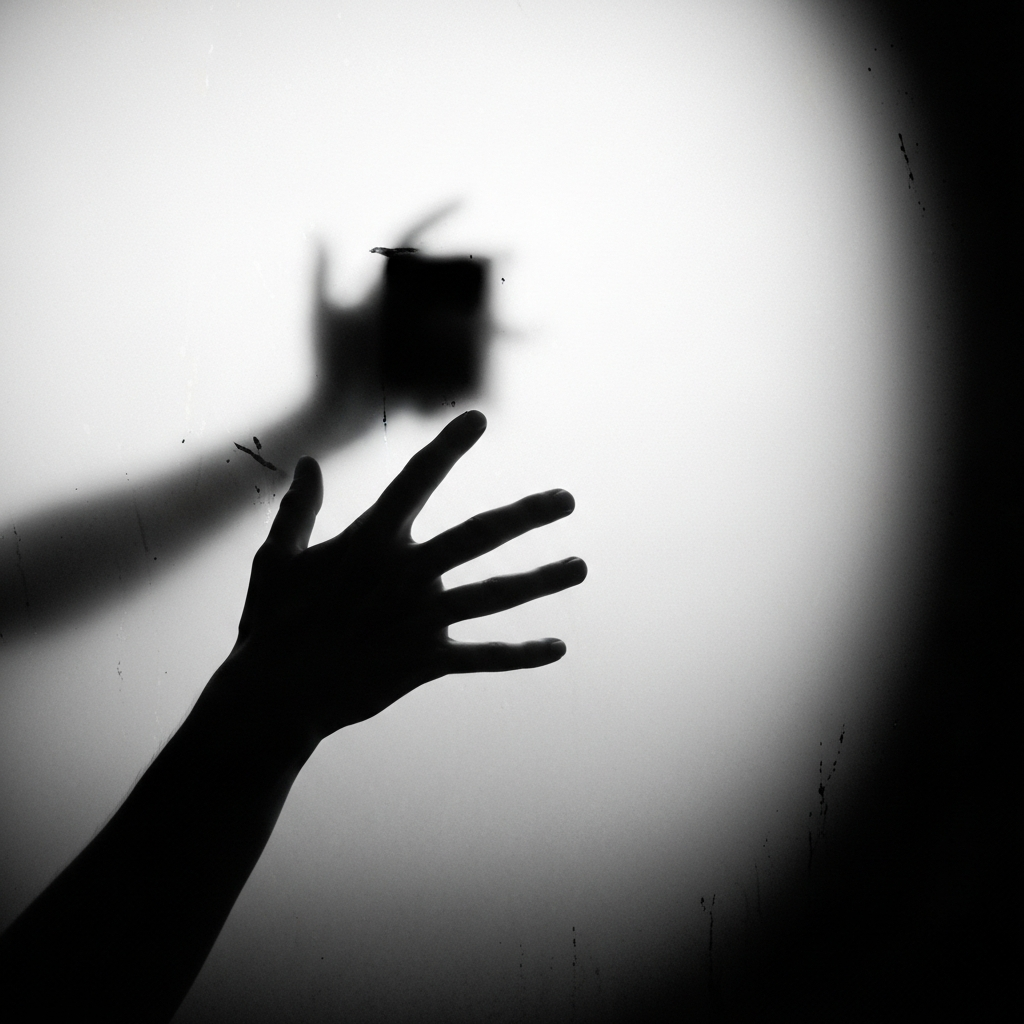
"I’ll be back—might be late." The moment the door clicked shut the room seemed to hold its breath. Two subway cards lay on the table. She had taken one; the other had simply been left behind. Why carry two cards? Who was she meeting? Beyond the fogged window, city lights drifted like ash. I crawled under the blanket and curled into myself. A single hair rested on the duvet. It wasn’t mine.
Where does this dread take root?
"Every reverie that visits when I’m alone is the precise inverse of what I truly want."
The worst-case scenarios we conjure follow an iron routine. Your lover meets someone in a place you’ll never know, in positions you can’t picture. The smile she gives you that very evening is, by coincidence, a shade sweeter. A coffee cup on a paper towel bears a clear imprint of her lips. Did she drink without thinking, or leave the mark deliberately, knowing I would see? I raise the cup and inhale. A foreign perfume tickles my nose. At the end of every fantasy stands me: crouched in the back seat, spying on them, or furtively scrolling through messages—knowing full well that being caught excites me more than the hiding itself.
Sujin’s story: the earring she found in his car
"Alone again today." Sujin sat in her boyfriend Minsu’s car. Just as she reached to unplug the USB from the cigarette lighter, her fingers brushed something inside the center-console box. A single earring—small, silver, round. Not a style Minsu likes. She rested it in her palm. The metal, which she expected to burn, was cold. Not mine.
That night Sujin descended to the underground garage where Minsu worked. She memorized the CCTV blind spots. At 7 a.m. his car slid in; a woman stepped out. Sujin recognized her face from the neighborhood café. The woman bent to pick up the earring from the back seat. Minsu brushed her hair behind her ear and smiled. Sujin watched from behind a subway pillar. The version of me holding my breath was the one trembling harder.
Sanghyeon’s night: after reading seventeen messages
"Movie later?" Sanghyeon was staring not at Yerin’s text but at a new widget on her phone: the "Find My Friends" app—active. While Yerin slept, he lifted her phone. Passcode: 1023, her birthday. Seventeen messages, most between them. Yet one thread caught his eye. "Thanks again tonight." Sender: Bro Junho. Time: 2:17 a.m.
Sanghyeon didn’t sleep. He sat alone in the living room, scrolling. Jun-ho had posted club photos the night before. Yerin wasn’t tagged—or perhaps she was simply untagged. When Yerin slept, Sanghyeon took her car keys. Inside the car he rummaged through her bag: cosmetics, wallet, a small memo. "Had fun again today." A man’s handwriting.
Why do we leap into this horror
This horror is not the opposite of what we want; it reveals the deepest desire inside us. The very idea that our partner is deceiving us excites us. This anxiety is the urge to strip away every blindfold. When we are left alone to touch their belongings, we covet their secrets. We do not seek their truth; we seek confirmation that they are lying to us.
The hallucination wounds us yet convinces us we are still alive. These ghastly visions that visit when we are alone are how we keep the relationship breathing. We protect one another precisely by deceiving one another.
So—when you’re alone, do you still reach for her phone?
After she closes the door, do you peer into her bag in the silence? Or the instant the latch clicks, do you tremble at the thought that she might turn back before you’ve had the chance to look?