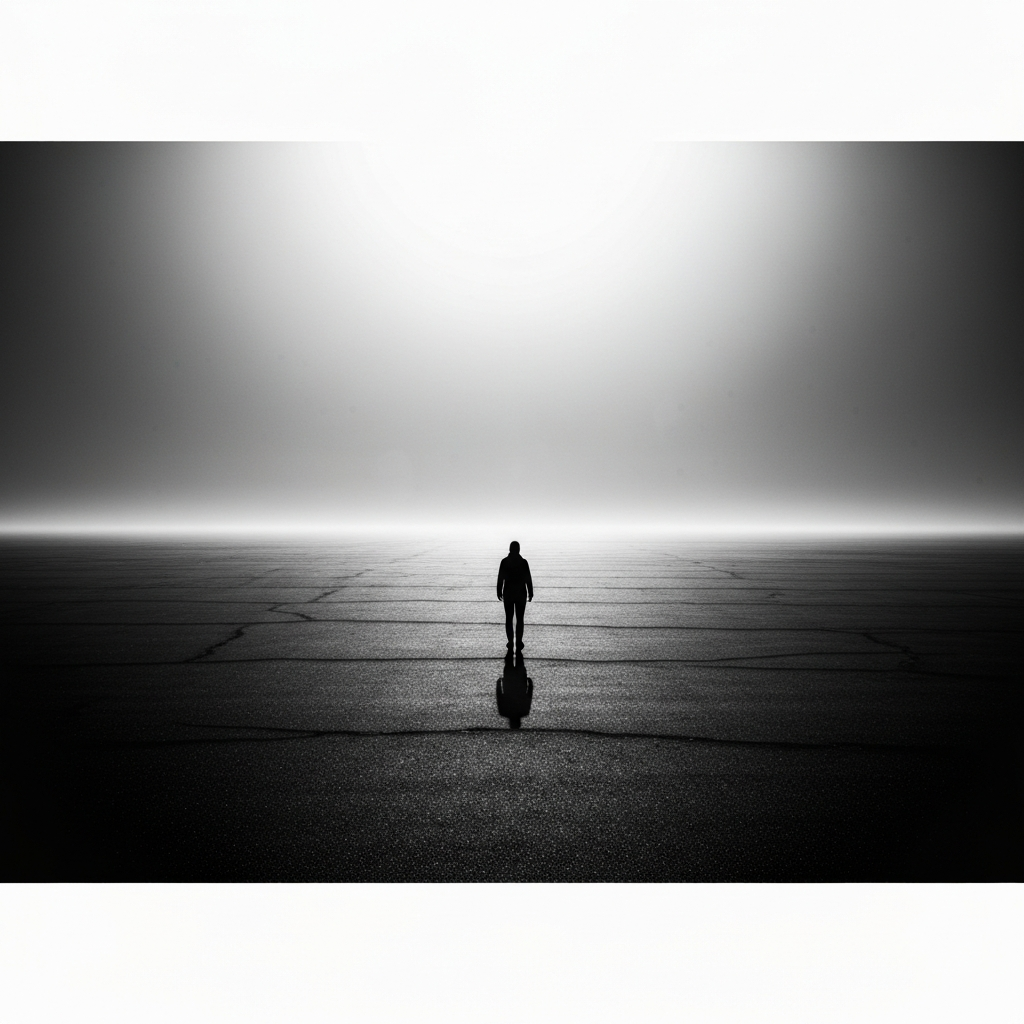
"Tomorrow evening at seven, if you’re not sitting at my dinner table, you no longer exist." Junhyuk spoke the words with glacial calm. They struck my ear like lightning. Then he said nothing more. He simply left. My phone screen held only the gray "read" receipt, and I was left alone inside a twenty-four-hour countdown.
The Edge of Erased Time
Twenty-four hours. One thousand four hundred and forty minutes. Eighty-six thousand four hundred seconds.
The numbers circle before my eyes; otherwise the weight of the word end becomes too real. Time that erases existence is always brutally precise. The arms that held me last night, the hand that stroked my hair, the lips that murmured I love you—all will vanish as if they had never been.
Why did I cling to those words? Not because I fear being erased, but because the very idea of being erasable is intoxicatingly sweet.
The Sweet Impulse Behind Fear
Junhyuk has always been that sort of man: someone who can erase another person. I knew it from the start—how he saw me, the space he wished to keep me in. One day he appeared out of nowhere, plucked the book from my hands in the little bookshop where I worked, scanned a page, and said:
"This book is too heavy for you."
That was the beginning. I was drawn to his gravity—to the power that could judge me, move me, perhaps delete me. That power swallowed me. And now it says it can erase me within twenty-four hours.
Two True Stories
1. March 2019, Seoul
Minseo did not come home that night. Three days earlier her boyfriend had left a single late-night message:
"My family wants to meet you. Friday, 7 p.m., my place. If you don’t come, I never knew you."
The word family has always been heavy. Minseo had none. A sick mother in the countryside, yes—but that was not her family. She stood in front of the door labeled my place, Friday 7 p.m.—then turned away. After that, she disappeared. Her boyfriend deleted her contact. Her social media went dark. All that remained was a notebook left on her desk:
"I stood inside the hour that could erase me. And the hour erased me."
2. November 2021, Busan
Dongjin, three years married, was suddenly summoned by his wife Sujin:
"Come to my father’s birthday tomorrow. If you don’t, I will no longer call you my husband."
Dongjin was at a company dinner. Over drinks he replied, "Fine. I won’t go." That night he did not come home. His wife packed his suitcase and sent it to him with a single text: You no longer exist.
For two years Dongjin has turned that evening over in his mind:
"Why should I have gone? Or rather—why didn’t I?" He keeps asking himself, Why did I give up the right to exist?
Why Do We Long to Hear We Can Be Erased?
Everyone, at some point, wants to be erased. Either existence is too heavy, or unbearably light. When a man says, I will erase you, it is in fact the sentence we secretly crave:
Someone, please release me.
The assurance that someone has the strength to hold us—and therefore the strength to let us go. The freedom granted by imagining we could vanish. The right to abandon existence itself.
So we are drawn to the words. The liberty of possible disappearance. The man says:
"If you don’t come tomorrow, you’re gone."
But he is speaking to us all: You may be erased at any moment, so it’s all right—even if you’re still here now.
A Final Question
Will Junhyuk wait tomorrow at seven? I have done nothing—only stared out the window, feeling time flow past. When the twenty-four hours are gone, will I cease to exist—or will nothing happen at all?
Which possibility frightens me more?