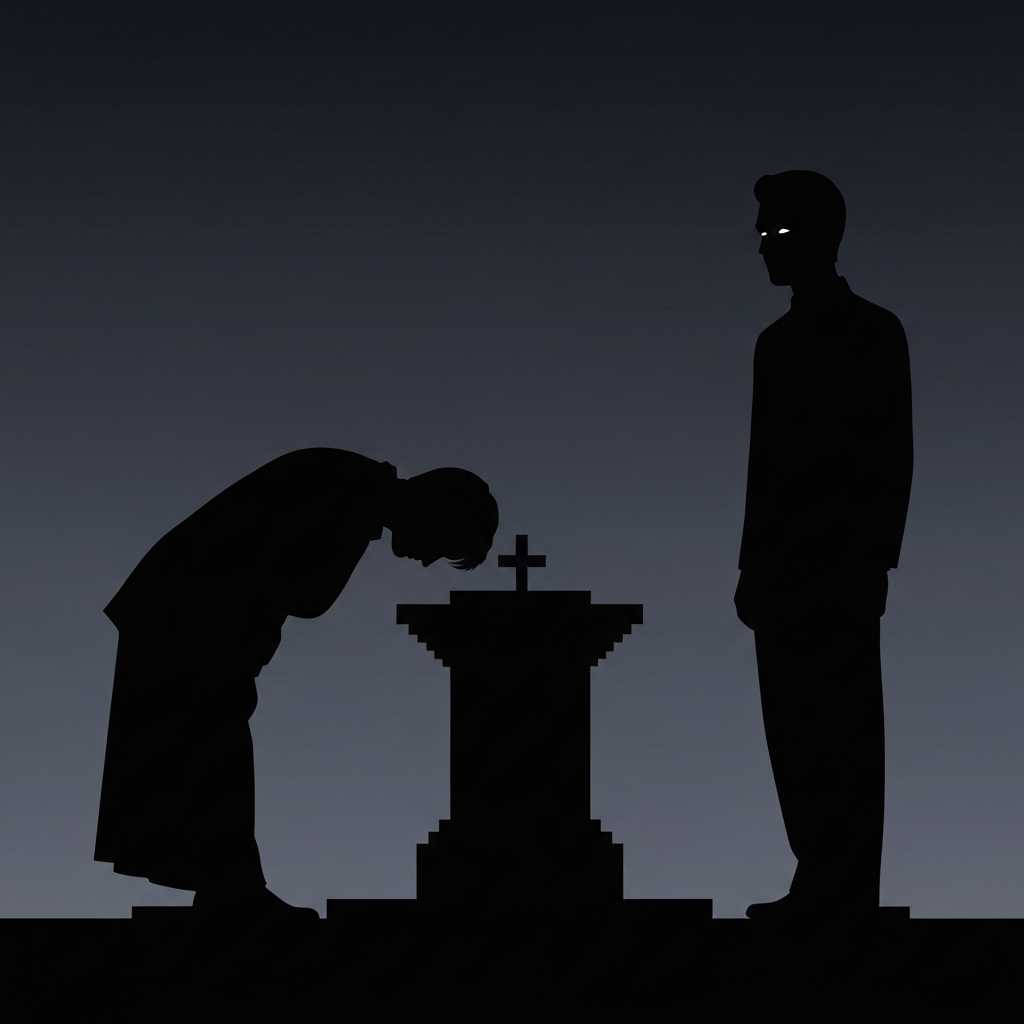
The instant Uncle’s body slid into the coffin, Yumin stepped between me and the bier and spat, “Why is your face so blank?”
Her voice was low, yet so cold that heads turned. I simply nodded. Shame was not what flooded me—a secret thrill did.
The Winner’s Smile No One Sees
We only show our true faces when someone dies. Amid the black-clad crowd, tears are smoke bombs. The real show is the voyeurism of watching who changes now that he’s gone.
The lie that “death makes us all equal.” Death grants the survivors a perverse liberty.
While Uncle lived, Yumin called me a “pathetic spinster.” No job, living alone, no man. Now she wanted to shame me at his wake. Yet death took my side.
The Honeyed Poison of the Chief Mourner’s Role
At Uncle’s funeral, I was chief mourner; Yumin was merely a niece. The chief mourner owns the death. A niece only has to appear with a bouquet—she’s a guest.
I kept bowing. Even when the undertaker whispered, “Madam, you may withdraw,” I answered softly, “There are still guests.”
Yumin rolled her eyes.
That bitch, using death to play the saint.
Her lashes trembled. Hadn’t I longed for exactly that tremor?
A Second Body, A Second Chance
Days later, Mother asked, “Did you go to your cousin’s wedding?” I shrugged.
I could never confess that at the funeral, Yumin had already taken one step back from me.
I opened her Instagram. In the wedding photo, Yumin wept as she caught her bouquet. I laughed out loud. Those tears were identical to the ones she’d shed at the wake.
The Blind Spot of Taboo
The psychoanalyst Schultz claimed, “The family is an arena where we murder one another with exquisite cruelty.” A funeral is the set for that drama: who becomes the chief mourner, who remains the niece, who weeps, who stands silent.
I did not humiliate Yumin. I swallowed the shame she should have felt—because shame is the longest-lasting revenge.
Final Scene
Days later, a DM from Yumin: “I’m sorry… about the funeral.”
I never replied. She will never know I didn’t forgive her; I simply claimed something larger.
Before someone’s death, do you know—truly know—what it is you want?