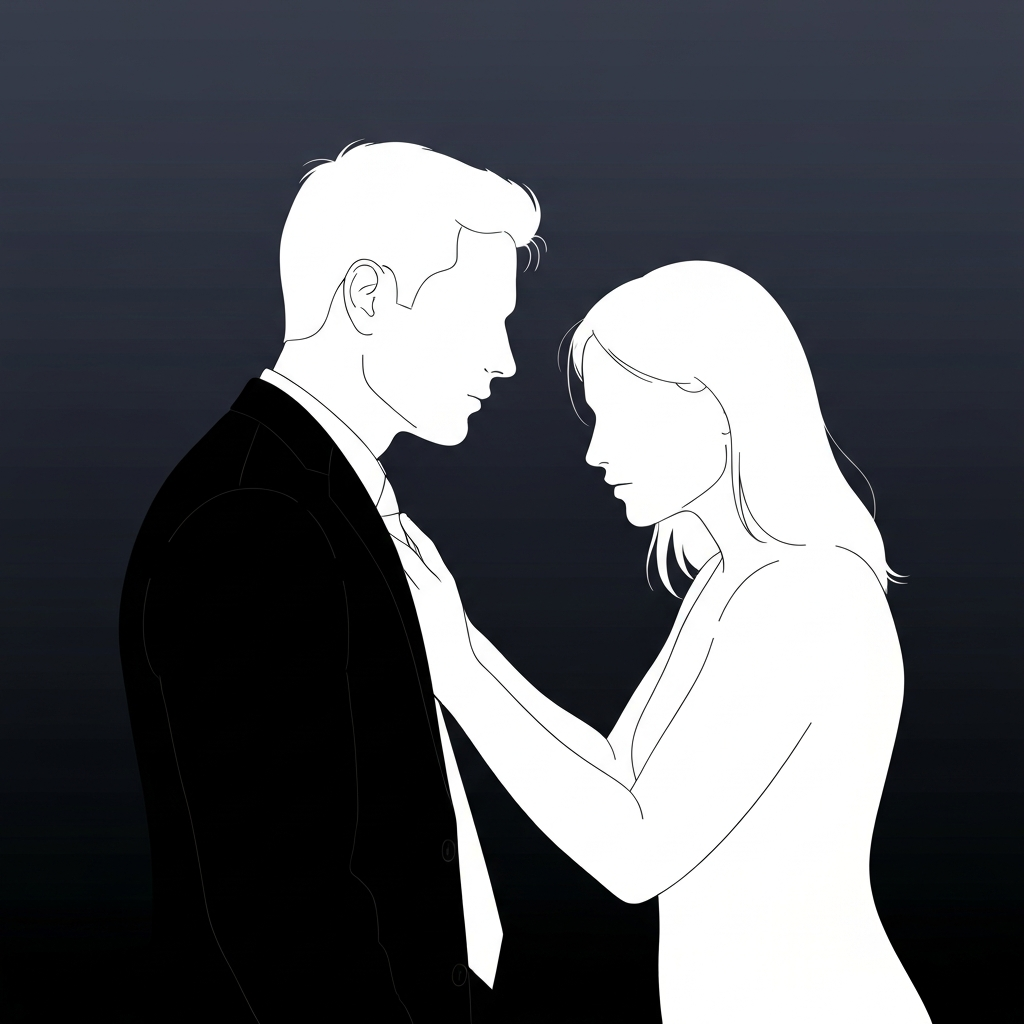
"It’s a face heaven gave me—what’s the problem?" he said
At the tail-end of the office party, under the pale wash of neon, he smiled. Kang Min-hyuk. A sculptor had dreamt of a 192 cm frame, then pressed marble into the features. The moment he tipped the soju glass toward me, the liquor didn’t disappear—my last excuse did.
Is this guy actually insane?
Even if I blamed the alcohol, he had never once said, "That’s not true." He just smirked and whispered, "You’ll come back anyway," as though the chaos were my fault alone.
His pupils held no syllable of apology
Why do handsome men expect the world to forgive them? Why do they believe a body alone can bend the planet?
Psychologists call it appearance-based narcissism. Yet the term feels flimsy.
What matters is the absence of guilt. Beautiful men never learned it; they never had to. Teachers, parents, friends—all of them smoothed every mistake with a smile.
So they never hurt. They only know how to hurt.
Soo-jin said, "He was the first ruin of my life"
Soo-jin, 29, designer. Her first lover was him. She met senior Jeong Hyun-woo in the university library—though "met" is generous. She chose the table he always chose; he knew why she was there.
Their first date was his dorm room. The moment the door shut, he said, "Your face is so pretty it almost makes me sorry you’ve already slept with someone else."
Soo-jin still tastes that sentence. Why did it sound sweet?
Hyun-woo kept texting other women. Soo-jin’s KakaoTalk filled with hundreds of identical messages: "We’re not serious, right?" Each time, she forgave him with one glance at his eyes.
I thought I was forgiving. I wasn’t. I simply couldn’t hate him. Hating myself was the scarier option.
Jun-ho’s story: "After he shattered me, he collected the pieces and rebuilt me"
Jun-ho, 31, programmer. His first love was a man. Park Jae-min. The moment Jun-ho saw him in the club, the air left his lungs. Jae-min kissed strangers as casually as greeting them; Jun-ho replayed the scene for hours.
Jae-min approached. "First time?"
Jun-ho nodded. That night, Jae-min led him to the alley behind the club. Jun-ho remembers almost nothing—only waking to find Jae-min already in someone else’s arms.
"Oh, you? Everyone’s awkward at first," Jae-min laughed.
Jun-ho kept returning—twice a week, sometimes three. The insults grew sharper: "Sleeping with you isn’t exciting," "Guys like you should be one-night curiosities." Yet Jun-ho went back for the occasional I miss you—a shot sweeter than any drug.
It wasn’t love. It was a narcotic.
Why are we drawn to our own wreckage?
Psychologists label it the dopamine-addiction loop. A beautiful face hijacks the reward circuitry. Like a slot machine, the payoff comes at random, and the unpredictability drives us mad.
But there is a darker depth.
Do we love self-destruction? Or do we need catastrophe to prove we exist?
Handsome men dangle possibility just beyond reach. So we sprint harder, clutching the delusion that we are special, that someday we’ll earn their truth.
Perhaps what we truly crave is not having them, but witnessing our own collapse.
Do you still believe you can make him laugh?
Tonight, maybe you opened his KakaoTalk profile again, whispering just one last time. Yet do you know what you’re actually hungering for?
Could it be that you want to destroy yourself, not have him?
If so, why does your finger still hover over his name?