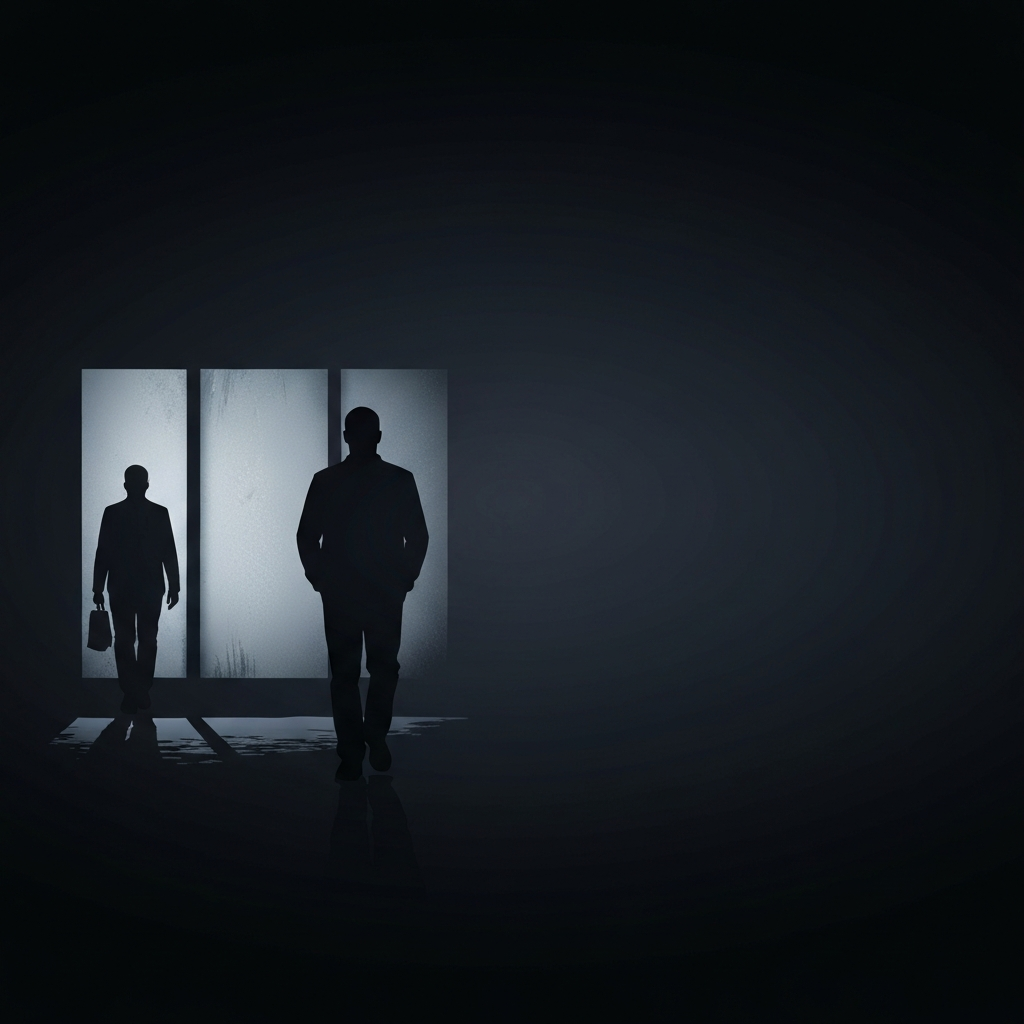
“I don’t want to heal without you”
The day she walked out, snowflakes drifted like ash. A single hospital bag in tow, tomorrow’s appointment slip clenched in her fist. I caught her shoulder and said: “It’s not because of you.” A lie we both recognized.
A mouth gone dry, one drop of sweet poison
Since then I replay, daily, the way her body twisted in pain. But in that scene I am always present. Beneath the white glare of the ward, when her pupils quivered, I was already astride the ache. The weaker she became, the larger I loomed.
I knew she needed me. So, for every inch her body crumbled, I hardened.
The word guilt is too delicate, too polite. What I felt was cruder: the urge to monopolize the title of “the one who helps.” From hospital corridors to pharmacy queues, I wanted every gaze to land on me, not us.
Partings written like annals
Case 1 — Jiyeon and Tae-u
Jiyeon was diagnosed with late-stage cervical cancer. The night before surgery, Tae-u pressed a tiny note into her hand: If tomorrow ends well, marry me. That promise drew a transparent fence around her body. The relationship ceased to be a negotiation. The sick body became evidence; the pledged future, a shackle.
On discharge day, Jiyeon refused Tae-u’s car. “It feels as if you love me only because I’m broken. Let it end here.”
Tae-u still cannot shake the raindrops of that afternoon. All he holds is the single prescription she left behind, stamped: Grief Inducer.
Case 2 — Sujin and Han-byul
Sujin developed a rare autoimmune disorder last autumn. When the medication made her hair fall, Han-byul wept first. So Sujin went to the salon and had it cut even shorter. Each time Han-byul stroked the stubble, Sujin asked:
“Am I only lovable because I’m sick?”
Han-byul answered with an embrace—but Sujin sensed the hug was so deep it tried to cradle the space she would leave behind. Winter came; Sujin severed contact. Han-byul still sleeps with her empty beret beneath the pillow, waiting for the last of her scent to vanish.
Why do we long to stand on our lover’s pain?
Because the role of wounded savior tastes like sugar. Beside the sick, every choice is masked: to leave is betrayal; to stay is mercy. Thus I bind myself—willingly, in truth.
While guarding someone else’s fracture, I indulge the illusion that I, too, remain unbreakable.
Pain is power. The more ill my lover, the more absolute my part: what to feed, when to let sleep, which words to choose. In every moment I become god. And when she heals—or leaves—I plummet back into mere humanity.
The smell after the door shut
I still hear it through the snow that day: the triple thud of closing. First, her exit. Second, my mouth drying shut. Third, my fall from “someone needed” to “someone who failed to help.”
Have you asked whose lifeboat your illness became?
What remains for me is her cooled body-heat and a future-shaped guilt. Yet is knowing enough? Or did I, back then, simply hide my own fragility on the scaffolding of her pain?
The moment I believed she left because she was sick, I may have been purchasing the shackled freedom of one pinned to another’s suffering.