‘Don’t use it this time’
“Room 1420. I’ll only stay until three.”
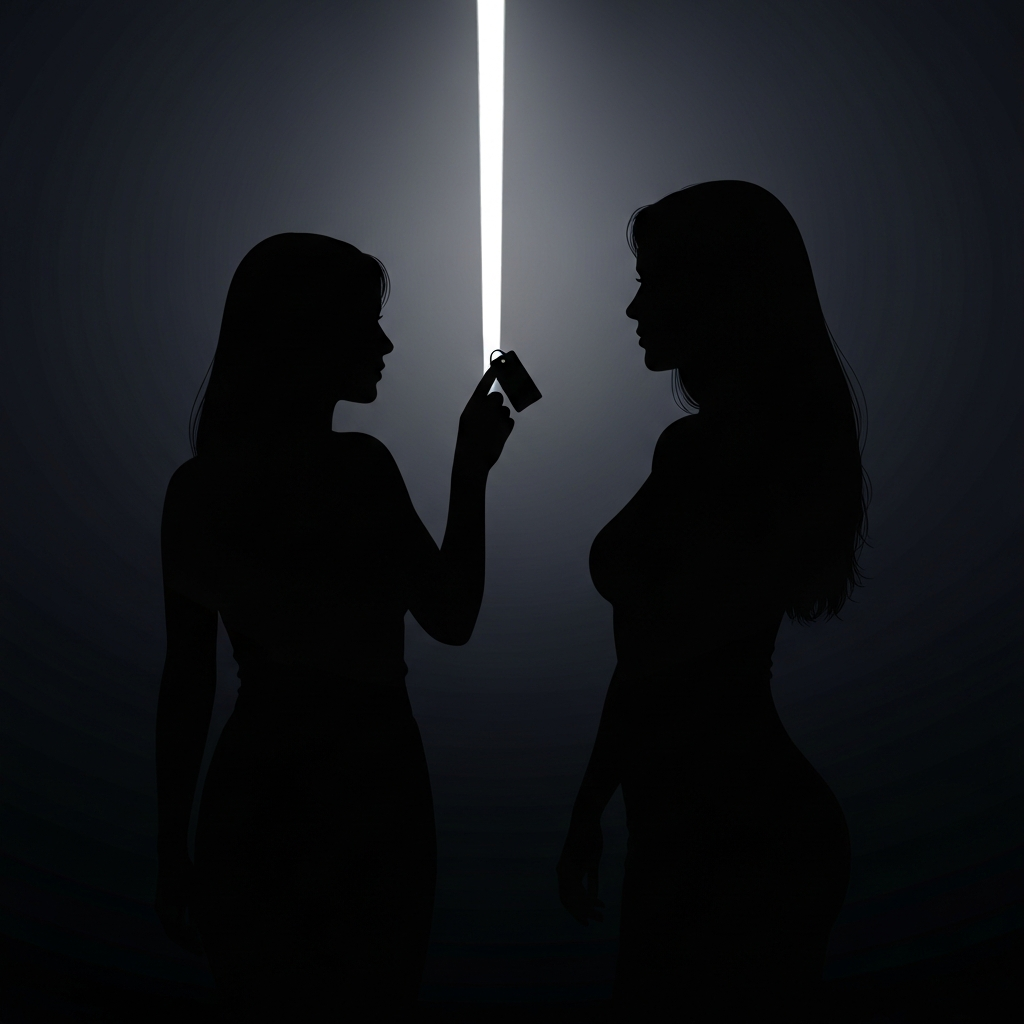
The key card glided between Jung-su’s fingers, cool as porcelain. Thirty minutes earlier, a man in a Hongdae bar had pressed it into her palm without a word. No name, no number. Only the muscles showing beneath his short sleeves and the smile that froze when he asked, “You’re married, right?”
She rode Line 2 home. Her husband was still at work. While two frozen slices of pizza warmed and she sorted socks for the washer, her fingers kept returning to the tiny plastic rectangle in her coat pocket. The edges pricked like teeth.
What is this thing? Mere plastic, yet it drums against her pulse.
The weight her husband never felt
Seven years in, Jung-su thought her husband perfect: neither more nor less love than needed, neither more nor less money. Perhaps that was the problem. Perfection had become a wall. When he left each morning, the warmth he left on the sheets felt like nothing more than familiar air.
“Do I crave the glitter others see, or the part of me that never glittered at all?”
The stranger’s gaze in the Hongdae bar had been different. Without a word it whispered, You’re still all right. That illusion turned a thirty-something housewife back into the chosen one. All because of a key.
She could use it
“Still unused?”
A KakaoTalk popped up. Sender: “Hongdae 9/15.” Jung-su laughed at the name she’d saved. For three months the key had lived in the deepest fold of her wallet. She had used it three times, each time with a different man. Same hotel, same floor, different rooms.
In the lobby elevator she met the same look in other women’s eyes. What are any of us looking for here?
The first man was a graduate student; no names exchanged, only a condom, two cans of beer, and forty-seven minutes of motion. The second was an office worker two years divorced. When she asked why he stayed in hotels, he said, “I don’t want to go home.” The third said nothing at all, merely closed his fingers around her wrist and murmured, “Don’t be afraid.”
Not afraid—what a lie. Going home terrified her. What if her husband found out? Yet the dread fermented into thrill. There is still something in me that can be destroyed. She could lift a single piece from the finished puzzle of marriage. The hollow it left felt like proof she was still alive.
‘Seon-hwa’ dreamed
Let me tell you about Seon-hwa. Thirty-five, married to a lawyer who clears nine figures, mother of two sons in a 34-pyeong Gangnam apartment. One Friday night, after hanging up on her husband, she went to Hongdae and took a key. She never used it. She sat for three hours on a lobby bench, watching couples come and go, then went home and wept on the cold bathroom floor while her husband slept.
“Why couldn’t I do anything? Or rather, why did I want to?”
Seon-hwa realized she feared not being caught, but never being caught. A life where nothing happens—she saw it for what it was: the cruelest sentence. The key still gleams in her wallet, unused.
The taste of taboo
Psychologists call it “ghost desire.” In the life we already own, we imagine the possibilities we never chose. Marriage gives the illusion of having chosen, yet “abandoned” is the truer word. All other men, all other lives—once they become forbidden, we finally taste how sweet they might have been.
The key is the symbol: I can still choose. The delusion that the door is not locked. In truth the key opens nothing; it only gives the mirage that it might. That mirage makes us feel alive, like stepping out onto the lip of a cliff.
The print left on her hand
Last night Jung-su lost the card. When she opened her wallet on the subway, it was gone. Dropped? Or deliberately let fall? She doesn’t know. Only the blunt memory of plastic lingers on her palm.
Was it real? Or did she simply want to burn?
Her husband will come home late again. Two slices of frozen pizza will warm; socks will be sorted for the washer. Her hand will search the coat pocket. Nothing. The emptiness no longer tastes sweet or bitter, only hollow.
In your hand right now—is there a key still waiting, unused? Do you truly know what it opens?