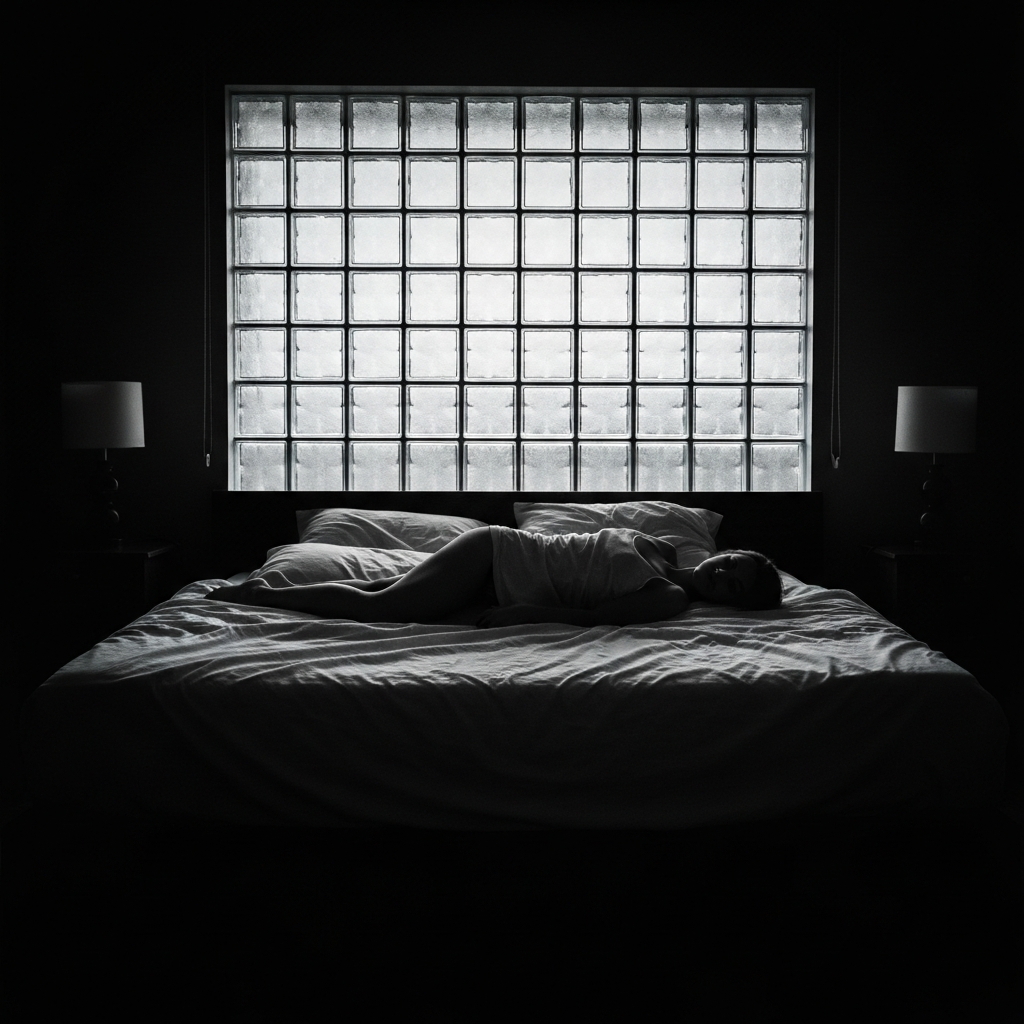
When I brushed the small of her back with the back of my hand, Ji-yoon shut the fridge and said, "Again? I just finished cooking—I'm hot." I couldn’t speak. Under the kitchen light, my trembling fingers withdrew in shame, nudged back by my heel. She took a cushion and disappeared into the living room. In one and a half seconds, I was alone again.
An embrace has become a luxury
Before we married, Ji-yoon used to ride the subway one extra station just to hold me. At the end of the day, she reached for my body faster than she reached for her ID. Pressing her cheek to my forearm, she would murmur, "Put me inside." Like a child opening wide for a spoon.
Now she claims the far edge of the bed, a steady forty centimetres away. When I lie down, that gap never narrows to thirty-seven. We coexist, but I shiver and rustle. She asks, "What’s wrong?" and I swallow the words.
What’s wrong, what’s wrong, what’s wrong.
Nicola and a Saturday afternoon
Nicola—thirty-five, not her real name—cried last night as though her bones were splintering. Her husband, Seung-min, gripped her shoulders and shook her. "Why are you crying? Say something!" It came out a single, ragged scream.
Nicola’s answer was one sentence: "I just wanted you to really hold me, once."
Seung-min gave a hollow laugh. "Right now? It’s three in the morning. I’m exhausted."
After that, Nicola sat under the dining table rubbing her toes together and muttered, "Sorry, I guess I was too clingy." She branded herself crazy bitch. Yet every morning the hollows beneath her eyes deepened. Seung-min grazed her cheek and said, "Calm down," but the moment his hand lifted, she felt as cold as marble laid on the floor.
The experiment of Ha Jung-woo, 41
The morning his wife caught a dawn flight, Jung-woo propped two shopping bags beside the bed. He stuffed them with his own T-shirts, then clutched the openings with both hands. His arms mimed the curve of her waist. Forty-seven minutes like that. When he woke, the bags had collapsed, crumpled like terry-cloth towels. Eyes bloodshot, he texted her: I miss you.
Three minutes later she replied: Me too. Come home soon.
When she returned, she tapped his shoulder lightly and went straight to the vanity. From that day on, Jung-woo hugged himself. Hidden behind the curtain, arms folded, he rocked. Whenever he heard her footsteps at the door, he quickly let go. He held his breath like a student practising alone.
Within a month he lost six kilograms.
The doctor called it idiopathic, but he knew. His body had begun exacting revenge.
Why do we beg to be held?
Psychologist Professor Terry Ottum calls it the emotional reflex arc. The warm vibration we felt cradled against a parent’s chest is etched into the reptilian folds of the brain. The pattern follows us to the grave. Even in adulthood it remains a survival strategy: pulse slows, stress hormones sluice away.
Yet after the fifth wedding anniversary the mirror tarnishes. The partner ceases to be new contact and becomes daily obstruction. We pine for the era when presence alone was enough to be embraced. Desire sharpens its blade.
Perhaps what I crave is not comfort but pain—the tiny percussion of being held, the tremor I count like an addict.
What does your body want right now?
I still lay a hand on Ji-yoon’s back. When she sighs over her rice, I weigh the moment—is it safe? If I hold her now will she pull away? Might she yield a little?
A thought flashes: maybe what I want is the moment of refusal. Yes, each time she turns me down, I burrow deeper in my mind, desperate for the next hollow of her arms.
In the end, I hate myself as much as she hates the gesture. My body studies why I am pushed away.
This instant, even if you are holding someone, I want to ask: are you alone or not?
What does your body crave right now?
And when it is denied, whom do you blame?