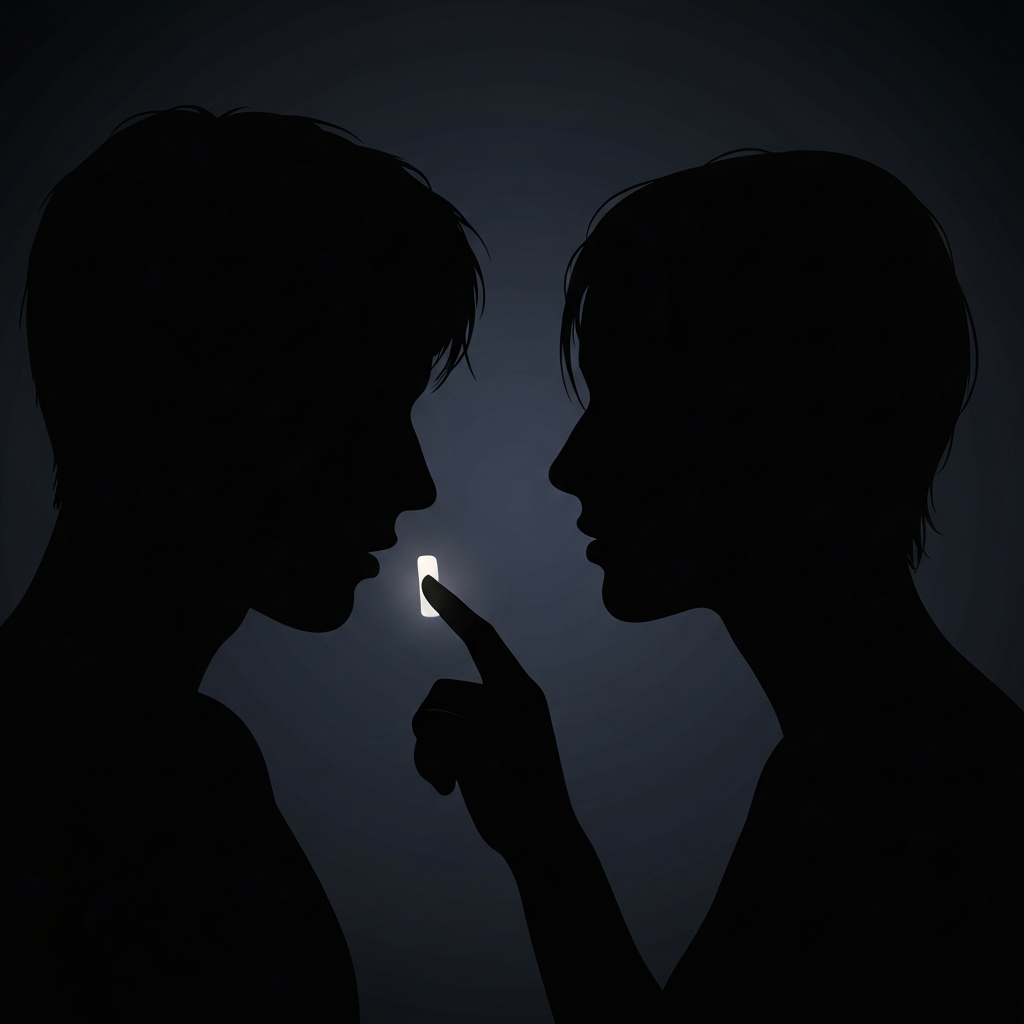
"The last message was mine," Ji-eun whispered, thumb pressed to the chat window. Forty-five hours of being left on read. The green dot pulsed like a heart, then vanished. Still, her finger rose and fell across the contact list, dancing over the call button.
Who will cave first? Not a casual question. It is the camel bone lodged in the throat; whoever swallows it first ends the desert.
The Clock of Silence
Hour 43, minute 17. Holding my breath. One text could fix everything—so why does my throat burn? Because the instant I go first, I lose. Power slips away.
Am I testing whether you want me, or begging proof that you don’t?
We sit at a betting table staked with each other’s futures. Whoever says I miss you first tips the scale; the other sinks into the marsh. So we seal our lips. Even if they crack and bleed, dead or alive, we refuse to speak first.
Practicing Not to Text
For eight years, Soyeon has studied the art of silence since a breakup. “We didn’t break up overnight. For a month we played Russian roulette with each other’s texts.”
- Day 1: He sent a single emoji instead of his usual ‘off to work’. She nodded—thought she’d won.
- Day 3: At 3 p.m., What did you have for lunch? She replied four hours later. Two days of radio silence followed.
- Day 13: At 2 a.m., he wrote I miss you. Her hands shook. But. At 6 a.m. she answered, Me too.
Me too. Obvious words—yet that same day it ended.
“I realized then: if I’d said I miss you first, we might have survived. But that would have been surrender.”
The Temperature of Power
Hyun-su and Ye-rin discovered that whoever says hello first changes the temperature of the next kiss.
Hyun-su: “If I reach out first, the next morning’s kiss feels loose—more like leniency than desire.”
Ye-rin: “If I text first, that night’s sex is cold. It feels like he’s granting forgiveness, not wanting me.”
The longer the silence, the fiercer the heat of longing. After five days Hyun-su cracked and stood at Ye-rin’s door. She nudged a small box toward him with her foot. Inside, a stack of pink bath bombs.
Now the fight is over who showers first. Three hours later Hyun-su plunged into scalding water. Through the glass, Ye-rin’s eyes flashed.
“You see? Even if I admitted I was wrong, you were the first to bathe.”
Since then they alternate contact every 72 hours. A rule. Break it and you’re back on the rack of silence.
Why We Crave This Cruel Game
Psychologists call it uncertainty addiction. The suspense of not knowing how far you’ll run is the purest drug. The fear that you might leave flips into the hope that you might stay.
We learned it as children in hide-and-seek: the terror of never being found is the thrill. The longer we withhold a message, the larger the empty space we leave becomes. That space measures how much we matter. So we choose silence, a brutal request: Show me who you are without me.
In the end, we fall in love not with each other, but with the void between us.
The Final Question
Even now, your last message sits 34 hours old. Each time the screen lights up, the blue glow erases my face. It’s fine—I won’t be the one to write first.
Yet another voice whispers: If he’s thinking the same, we are forever finished.
So I ask: if I open the chat right now and type I miss you to the first name that appears, would that be defeat—or salvation?