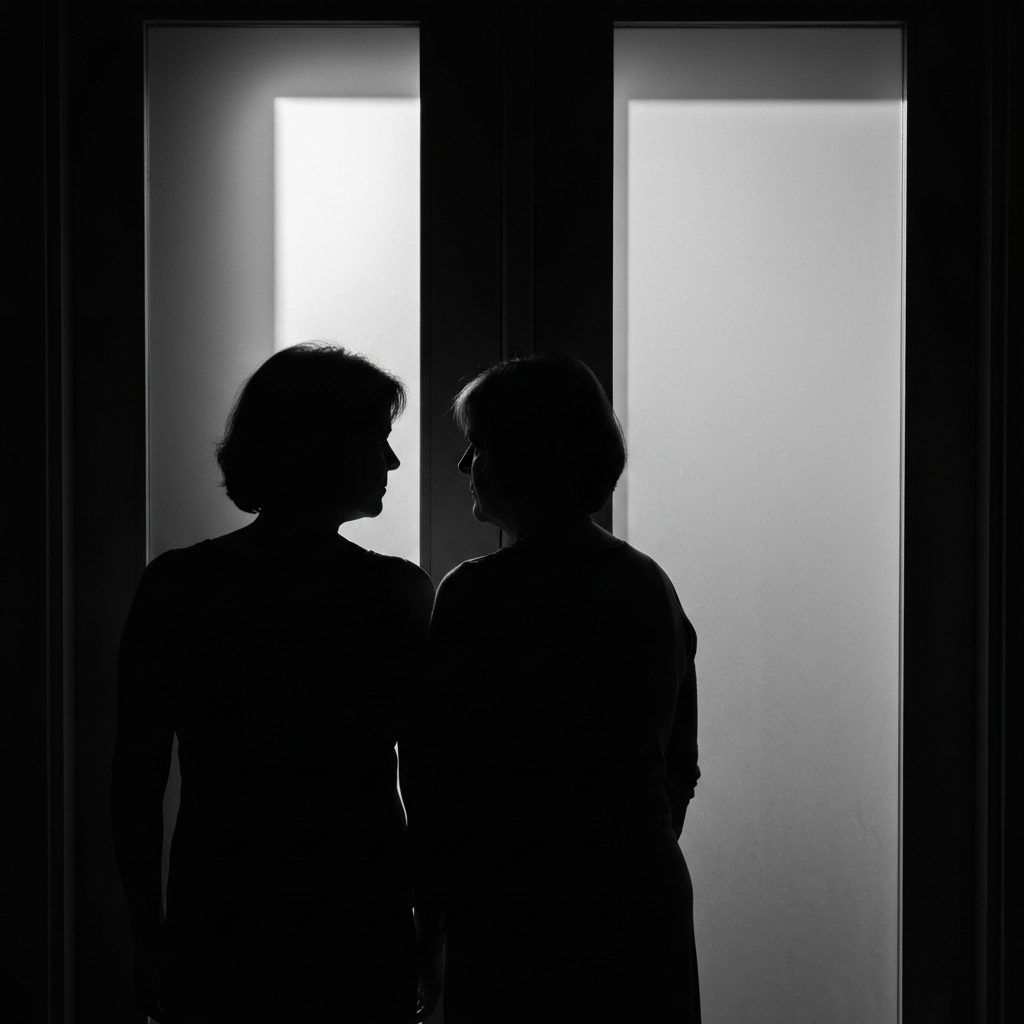
At midnight, the smart lock chirped and my breath froze. Was Tae-seong still at the office, or already in her bed? I stood not at the master-bedroom door but at the smaller one, catching the scent of abandonment. Through the crack I glimpsed my husband’s bed: no body, the duvet pressed smooth, the pillow uncreased. The emptiness squeezed my chest.
The suffocating silence behind the locked door
Fifteen years ago Tae-seong asked for separate bedrooms “to sleep better.” First it was his snoring, then the early commute, then simple habit. I invented excuses. Yet every time my fingers brushed the doorknob a whisper hissed, it’s already too late. The moment he closed his door, I began doing the same next door—ten years ago. Tae-seong never knew. Or pretended not to.
Inside my drawer, beneath silk pyjamas, small instruments of fantasy. On the name of marriage we have cultivated our separate forbidden zones. I felt no guilt; the conviction that he commits the same crime kept me breathing. When light leaked from his room at 2 a.m., I switched on my bedside lamp and plugged in earphones. An unspoken contract: we will never hear each other.
The basement without a key: two true stories
1. Eugene, 42, forty-nine-pyeong apartment
Eugene’s husband Seung-ho comes home late every Wednesday. “Company dinner,” he says. Eugene sets a tiny camera on the headboard to record—not to spy on him, but to find out what happens if I fall asleep first. At 2 a.m. the door creaks. Seung-ho mutters, “Today too... I held back. Let’s get inside.” The audio captures only a metallic click, a zipper descending, then hushed breathing.
Eugene turned each still into a film in which her husband’s gestures were aimed at her. After that she repeated the same crime louder and longer in her room. When Seung-ho’s Wednesdays ended, light seeped beneath Eugene’s door on Thursday dawns.
2. Sua, 38, old detached house
Sua’s husband Min-jae lost mobility in his lower body after an accident ten years ago. Intercourse remains possible, but Min-jae no longer feels like a “complete man,” so he sleeps nightly in the study, “researching late.” Sua climbs to the attic. On an old laptop she plays downloaded videos. The man on screen resembles Min-jae but moves perfectly. She saves them in a folder labelled Jiho—my husband’s best friend. Whispering in Jiho’s voice, she says, “Min-jae never has to know. It’s our secret.”
One day Min-jae limped up and opened the attic door. The screen was dark, but Sua’s fingers still moved. He averted his gaze. They were filling each other’s incompleteness the same way. By unspoken consent: never intrude on the study, never intrude on the attic.
Why we insist on a “forbidden door”
Freud claimed prohibition doubles desire, but modern psychology digs deeper. Separate bedrooms are not mere habit; they may be the final courtesy of protection. In one bed everything is exposed: breath, scent, words spilled in dreams. So we erect labyrinthine doors.
When the door is locked, I cannot see the monster in me, nor the one in you. That, somehow, is how we love.
The allure of taboo lies here: we do not fully know each other, and that keeps us burning. Committing identical sins allows the illusion that “we are fine.” Extreme intimacy, extreme distance.
Where is your door locked right now?
Not long ago I found a key outside Tae-seong’s door—the first duplicate in fifteen years. I did not use it. Pocketing the key, I turned and eased my own door open. The room was still warm. As I closed it, I realised you already know this story. At this very moment you too may be choosing which door to open or close.
So tell me: is it a door you long to open, or one you wish to keep locked forever?