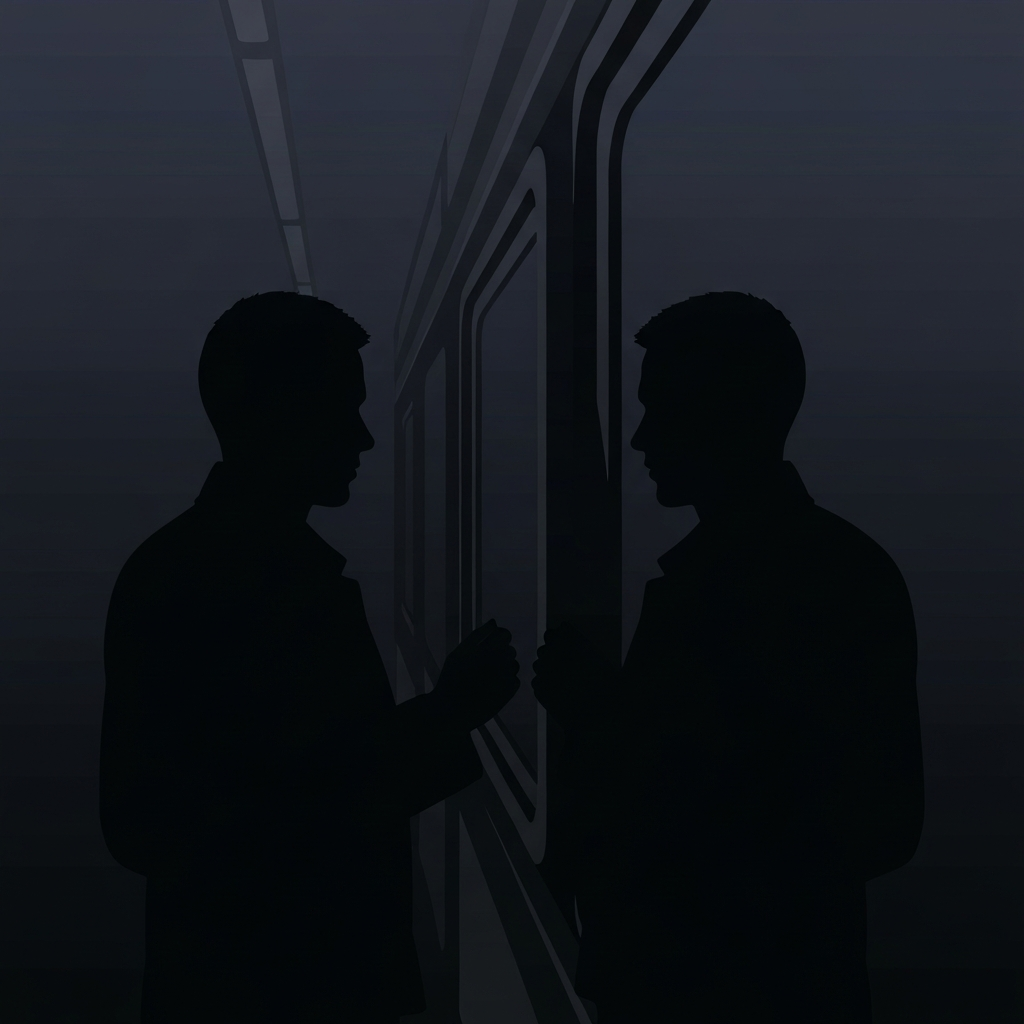
“Same face again today.”
Jongno 3-ga, the last stop on Line 2, thirty metres underground. A chill crawls up Jimin’s toes as the train pulls in. On the ride home, she turns and sees Jun-su’s profile worn as smooth and familiar as an old coin. Same seat, same gaze, same smile—day 312. Without thinking, she speaks.
“Same face again today.”
Jun-su chuckles. “Isn’t that good? Familiarity is comfort.”
But the word boredom is wedged in his throat, and Jimin hears it. She looks away, out the dark window; her reflection trembles like the first shard of a relationship beginning to shatter.
A thirst with no name
Last night, just before drifting off, Jimin clutched the edge of the blanket. Beside her, Jun-su exhaled the same temperature, the same cadence. The stillness felt ominous. What once blazed in the chest had cooled to lukewarm water.
Why don’t I tremble anymore?
Her heart whispered, What you want isn’t safety; it’s unrest. The sentence drifted through her mind: Love without anxiety isn’t love—it’s habit. She rolled over and pressed her ear to Jun-su’s chest. The heartbeat marched at the same steady pace. Even his pulse had grown predictable.
Han-su’s pupils
Han-su, 29, corporate PR. Eleven months ago he swiped right on Eugene and was instantly spellbound. On their first date she’d said, eyes sparkling, “I chase novelty twice a day.” Within two weeks he suggested they move in together; within six he’d put a deposit on an apartment.
But last month the sparkle vanished.
“Anything different today?” he asked.
“Just came home,” she answered, brief.
Silences grew long. Last night Eugene lingered in the bathroom for thirty minutes. Han-su pressed his ear to the door and heard only the soft taps of a phone screen—someone soliciting fresh reactions.
He sat on the edge of the bed and closed his eyes. Eleven months flickered past like flash cards: first kiss, first trip, first fight, first reconciliation. All those firsts now felt like faded photographs worn soft at the edges.
When Eugene emerged, he asked quietly, “Are we… over?”
She set down her toothbrush. “I don’t know. Something just feels… gone.”
Before the desire goes cold
Humans oscillate eternally between stability and novelty. Neuroscientists speak of love’s one-year shelf life: dopamine, serotonin, oxytocin surge for twelve months, then taper. Yet what we overlook is not chemistry but psychology.
Love doesn’t fade; the way we love does.
At the one-year mark Han-su could no longer meet Eugene’s eyes for a morning kiss—not from awkwardness, but from a sense that it was no longer necessary. Jimin now asks Jun-su, “Have you eaten?” instead of “I love you.” The words have changed, but beneath them lies the end of desire. And we witness that ending in cold silence, because no one dares ask, Who will break it first?
The relationship stands on ice: we know it may crack, yet no one steps forward.
The red thread snaps
Signs are subtle. A Kakao reply arrives five minutes late. A movie is abandoned halfway. When hands meet, only fingertips brush.
Last night Jimin dreamed she lost Jun-su—his back receding, impossible to call after or grasp. She woke with wet cheeks. Jun-su lay beside her, already absent.
Han-su noticed Eugene’s phone wallpaper: a photo of them from six months ago. Eugene smiled, but her eyes were different. They no longer held the gaze she gives today’s Han-su.
That evening he got off the subway without thinking and, walking aimlessly, found a broken red thread on the pavement.
The sound of the flame dying
The end of year one is quiet. Early days were noisy with quarrels; now we long even for fights—because fighting is still attention. Hatred is a variation of love; indifference is nothing.
We fear not losing each other, but realizing each other.
So no one speaks first. Instead of “I’m bored of you” or “I’ve stopped liking you,” we choose silence. Instinctively we know: relationships end not with words, but with their absence.
Leave it, or let it collapse
Next morning Jun-su leaves without a word. He doesn’t look back. Jimin opens the fridge and pulls out water—not from thirst, but to fill a moment when nothing can be done.
Han-su waits for Eugene after work. She arrives thirty minutes late, showers immediately. Door closing, water running, toothbrush scrubbing—each sound tolls like a bell announcing the end.
Someone asks, “Does every love die at one year?”
No. We simply don’t know what must change. We yearn for change yet fear it. So when the year arrives, we become accomplices waiting for the end.
What are you looking for now, in the eyes of a lover you’ve had for a year?
Perhaps the silhouette of the self that has vanished.