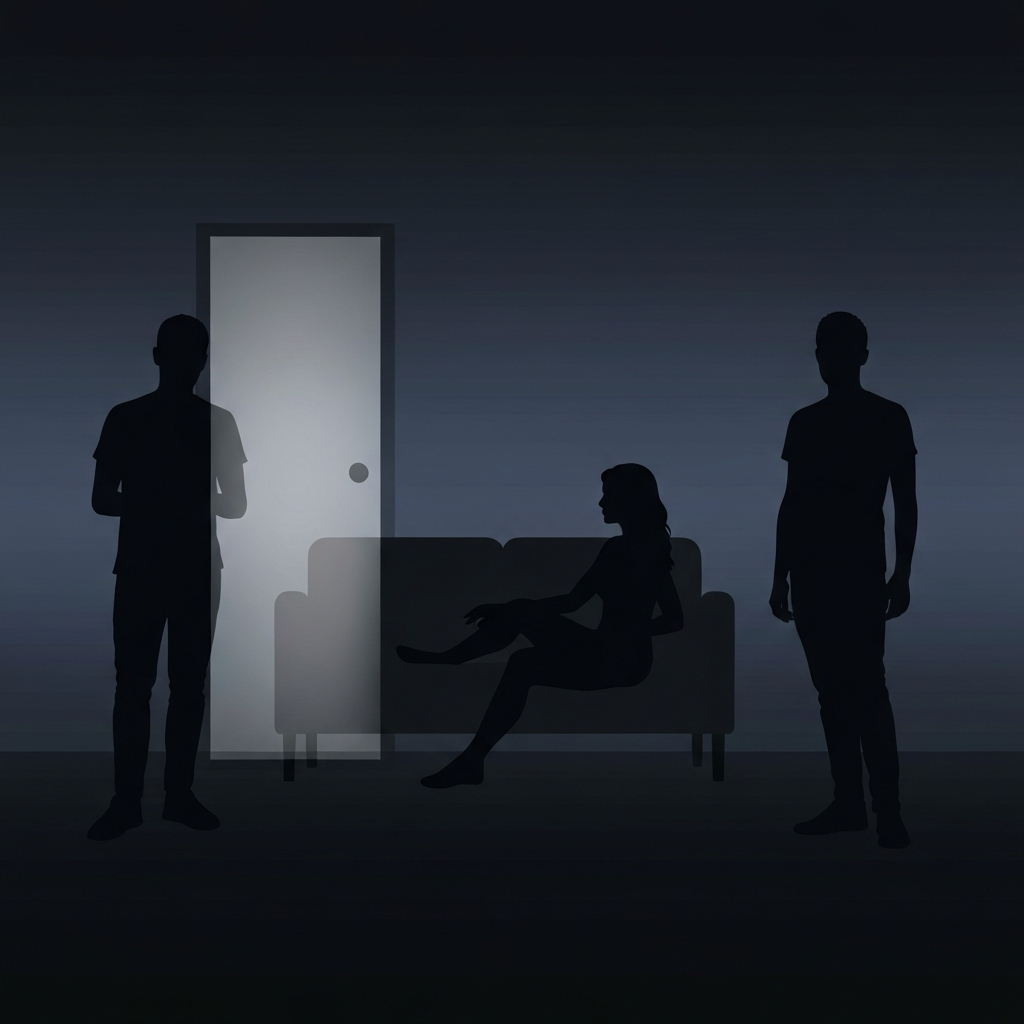
The Afternoon I Couldn’t Speak
“How has he changed your life?” The therapist’s voice was perfectly calm. I swallowed for thirty silent seconds. One sentence coiled in my throat like a snake. “I don’t even remember who I was.”
In the Quivering Shadow
We’ve been married fifteen years. First love, first kiss, first sex—all of them with him. I had no baseline for comparison. “This must be how life is,” I told myself from age twenty onward. On the nights he came home late, I would sit on the edge of the bed and watch the back of his neck. The scratches there were always vivid. When he emerged from the bathroom, he pulled the blanket over us without a word.
“Who did you see today?”
“Just a company dinner.”
The lie was obvious, but I didn’t push. I had already retreated—long ago, in a place I never noticed.
Yeon Su-en, 38, Marketing Team Lead
Yeon Su-en comes to therapy every Wednesday afternoon. She claims to enjoy her husband’s “measured emotions.”
“He never raises his voice. Instead, he withholds words for three days. That’s scarier—it forces me to apologize first.” Last week she discovered he smiled at news of a high-school friend he hadn’t seen in twenty years. Because of that smile, she cried for two nights.
Min Yeong-i, 45, Pharmacist
Min Yeong-i issued herself a voluntary miniskirt ban after her husband said, “Anyone who sees you dressed like that will know what you are.”
“I don’t wear a single style he dislikes. My closet is nothing but dark-blue jeans and plain T-shirts now. Yesterday I opened the door and felt like a primary-school kid.” She has seen her husband loitering outside the pharmacy after closing time. She can’t tell whether he’s watching over her or guarding her.
Why We Fear Disappearing
Identity is blurry by nature, yet marriage is a crucible that melts it faster. A single glance can make you fold your collar; a single sentence can upend your day. The fear of becoming someone else is, in truth, the fear of no longer remembering who we were. So we obsess: we dissect the other’s schedule, scroll through texts, inhale lingering scents. Still, no answer arrives.
After the Silence in the Therapy Room
“How has he changed you?” At last I said, “I don’t know. I can’t remember who I was.” The therapist nodded. Perhaps she repeats the same question to herself.
Do You Remember?
Do you still wear what you once loved? Or do you choose only what he likes? The moment you notice that difference, can you say whether it is love—or a prison?