— I don’t know anymore. Even when we’re together, you’re not there.
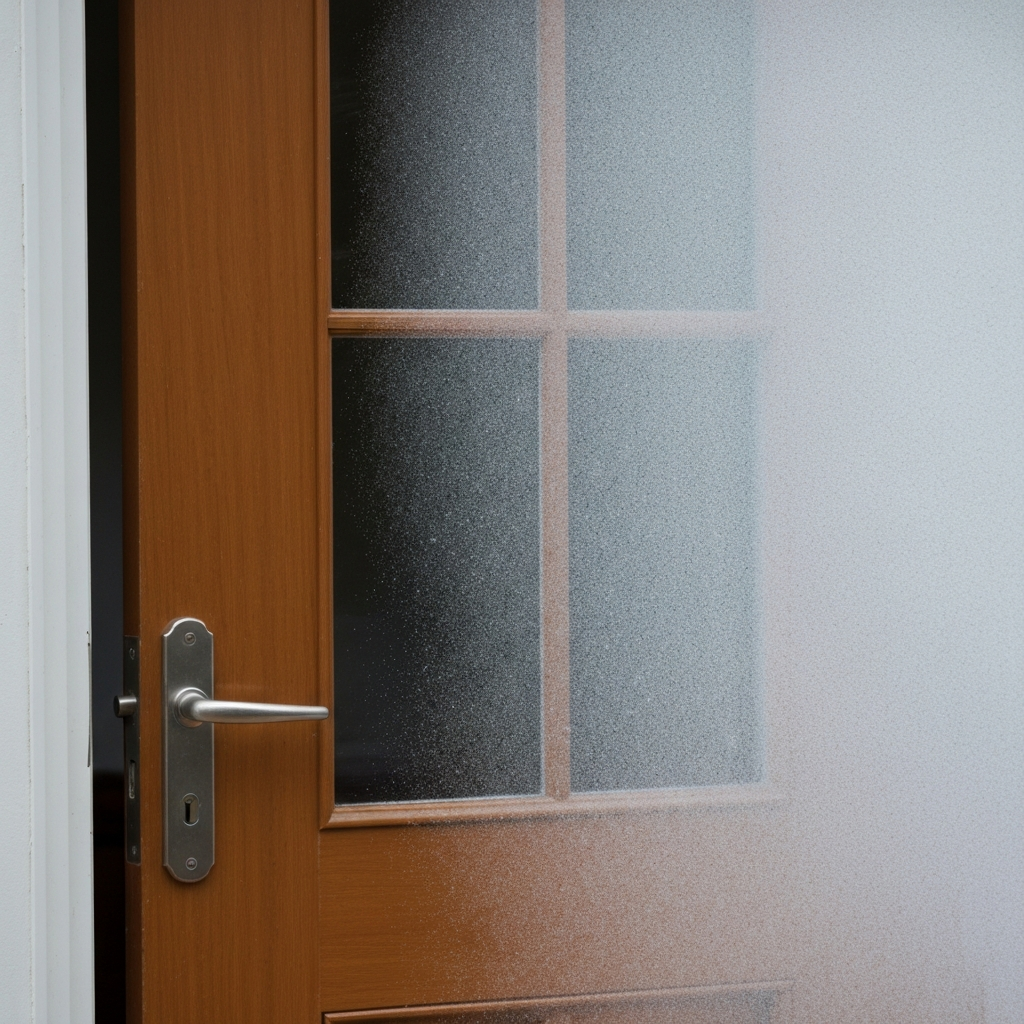
The moment the words left Eun-jin’s mouth, Ju-hyeong took a half-step backward on the balls of his feet. A stray Lego rolled under his heel and bit into his skin, but he never felt the pain. Twelve years. For 4,380 dawns they had stacked one small habit upon another, a painstaking tower of routine. The sound of its collapse was inaudible; the ears registered nothing. When Eun-jin closed her mouth, the air itself died. The plastic tang of the still-spinning microwave, the milky haze of detergent ghosting from the washer—every scent hardened into a yellow silence.
A faint scent between you and me, standing in the middle of the living room
Have I ever tried to leave you? No—I’ve tried to leave your absence.
Silence was not a clot of tension; it was its opposite. A simultaneous decision: From this moment, we will not speak. After their lips sealed, the room rang with transparent glass. Each footstep sounded like splinters underfoot, yet nothing shattered.
While washing the dishes, Eun-jin let the cutlery slip—one chopstick at a time. Ju-hyeong did not stoop to gather them. Lukewarm water licked their ankles. There was no smell at all.
Anatomy of desire: why we fall in love with absence
Marriage appears to be a ceremony of confirming each other’s presence. The real taboo, however, was to cherish the absence that clings to presence like a shadow. After twelve years the body grows accustomed: the reach of a hand, the rhythm of breath, the nape glimpsed over a shoulder. And the clearer thing—sharper with each passing day—is the vacant silhouette stamped where the beloved once stood.
It was never imagination in front of the living spouse; imagination was the carbon copy of what had already happened. To love “you-without-you.” To keep “the you I can’t see right now.” That was the naked desire revealed only after twelve years of marriage.
True-to-life story one: Ju-hyeong and Eun-jin, 3:17 a.m.
Ju-hyeong woke at 3:17 a.m. The first thing he saw was not the LED ceiling lamp but the back of Eun-jin’s head rising out of darkness. She sat on the sofa, gazing beyond the window. When the refrigerator clicked, her shoulders trembled.
He felt for the floor with his toes; each step glued twelve years of weight to his soles.
Why aren’t you asleep? … Do you want to talk? … Can’t sleep because you’re sorry?
Instead of answers, a small photograph fluttered from her hand: their first date, twelve years ago. Both faces were flushed. On the back, in Eun-jin’s handwriting, still legible: When we’re old, we’ll look at this again.
Reading it, Ju-hyeong understood for the first time what he had discarded: the desire not to age, the desire to be loved without ever growing old. At this very moment, that longing hovers above the photograph like breath on glass.
True-to-life story two: Eun-jin’s monologue, 1:24 p.m.
At exactly 1:24 p.m.—146 minutes later—Eun-jin stepped into the living room for the first time. Ju-hyeong was in the bedroom. Four meters between them. She traced the door with her palm.
Is this where I’m supposed to be?
She turned the knob. The room was literally empty. Only one of Ju-hyeong’s T-shirts lay on the bed, deputizing for him. She lifted it. No scent. Only detergent. She pressed it to her nose and inhaled. Still nothing. After twelve years, Ju-hyeong’s accumulated scent had vanished.
I kept loving the you who wasn’t there. The you who was present yet absent.
Why we are drawn to this: the craving for absence
Psychologists speak of “desire for absence,” not to fill a present lack but to treasure the lack itself. The cruelest point of a twelve-year marriage: each demands the other’s presence while secretly wishing to preserve their absence.
Don’t disturb my empty place. And love that empty place for me.
Thus the sentence Eun-jin hurled was a final exam—no multiple choice. An essay question addressed to “us.” Not How shall we live now? but Who, from now on, will love the absence?
Last question
Nothing has changed in twelve years of sameness. If anything has changed, it is the immense empty space that has opened between you and me.
So I ask: the reason I loved the you-without-you—was it because I wanted to become that empty space myself?