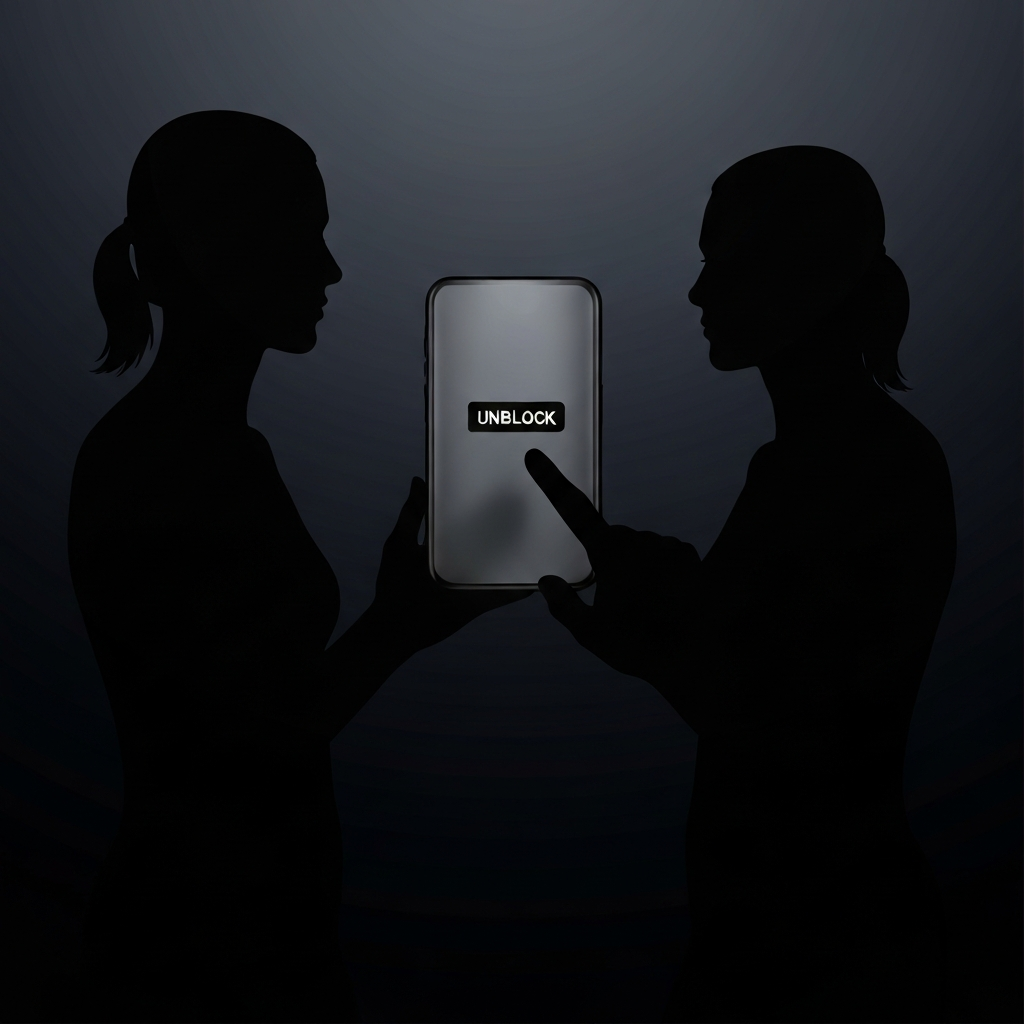
Tonight, the Fourth Attempt
I shifted the dark phone from right hand to left, then back again. “This time it’s really over.” My heart had climbed into my throat. Two gray letters—Sang-min—floated above the chat, tightening around my chest even in monochrome. I blocked him forty-seven days ago, yet every time my fingerprint unlocks the screen the same black banner appears.
‘This contact is blocked. Leave the chat room?’
Absurd, isn’t it? I was the one who cut the line, and now I’m the one coming undone?
The Quiet Intoxication After Blocking
Blocking, in truth, was the most flamboyant goodbye. At three that morning, when his two-word message—“Babe?”—lit the screen, what I tasted first was a honeyed victory. As if I’d shouted the winning move in a game of tag, I pressed the Block button and felt catharsis flood me. The knowledge that he could no longer reach me became a secret passageway open only on my side.
From that day on, I imagined his despair a dozen times a day. I painted it like perfume over every hour: How haggard must he look without me? His imagined devastation became my emotional signature scent.
But.
On the forty-seventh day, I circle the unblock button. Why? Because the power of blocking lives only when he proves it. A crown worn alone is merely hollow metal.
Pale Little Lies
First Story — Eun-bi, 29
“Nothing changes just because you cried all night,” he used to say.
Eun-bi spun her coffee cup slowly. For eight months Young-jin had answered every 3 a.m. message she sent with the same silent read. At last she blocked him—then, three days later, texted: “May I unblock you?”
“Blocking felt like directing the breakup scene myself, yet secretly I wanted him to return. A sleight of heart.”
Young-jin replied in thirty minutes: Why did you block me? In that instant her fingertips turned ice-cold. She had believed she severed the thread, but the cut itself had been only another form of censorship.
Second Story — Sun-woo, 34
Every Saturday, Sun-woo reached out to her ex, Jae-min. She had blocked him the day he announced his engagement to another woman. Yet come Saturday she toggled Unblock, waited thirty seconds, then blocked him again.
“That half-minute is pure suspense. Is he online? Despite the wedding ring, I still hope he looks more wrecked than I do.”
Sun-woo dropped her gaze. “Unblocking is a thirty-second gamble: either I win, or I lose spectacularly.”
The Paradox of Power
Blocking is never a simple refusal; it is a variation on endless connection. Each time we press the button we send an obsessive whisper: Remember the me who pushed you away. In a single gesture we place the other in two opposite spaces—utter exile and utter spotlight. The gap between is where we breathe.
Psychologist James Grier calls this regressive power: a design that drives the other deeper into us the moment we sever the line. One blocking notice turns the sentence from eternal death to temporary leave. And so we hover, ready to press again—Unblock. The taste of power is too sweet; we must keep it from trembling on our fingertips.
And So, Tonight Again
3:12 a.m. I still clutch the phone.
If I unblock, I lose; if I keep the block, do I still lose?
On the forty-seventh repetition of this question I want to test the power of the block. While Sang-min can send nothing, my mind sharpens toward him like a blade.
Did I block him—or myself?
Right now, in the dark, are you too tracing the Unblock button of someone you once cast out?
The one pretending to have won—did you block him because, deep down, you wanted to lose?