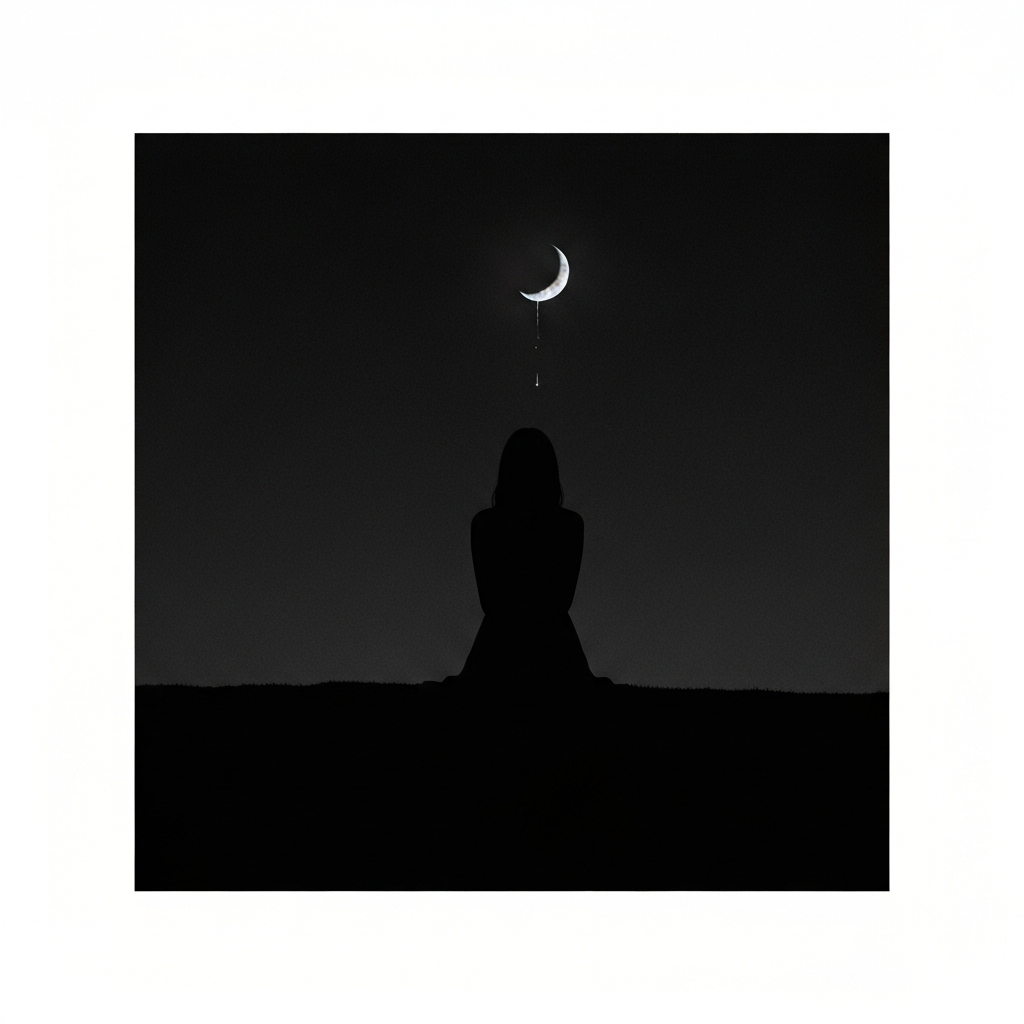
“Aren’t you hurting a little too much on your own?”
Jun-hyeok hadn’t even added an emoji to his last text. That night, Yujin curled at the foot of her bed and turned the speaker on. The whole room trembled, yet she knew he couldn’t hear it. She kept raising the volume anyway. When the music stopped, her heartbeat was so loud she couldn’t bear it.
She drove a nail through her own chest
Why must I become the greater sinner?
Jun-hyeok, past thirty, claimed his life felt fuller each time he bought another piece of camping gear. Yujin tried to copy his “art of letting go,” the method he used to clear space, and ended up setting down every last part of herself. Men document their reasons for leaving; women replay their reasons for being left. That difference is what draws blood.
A longing that eats the flesh
Song Mi-yeong, 29, HR department. Last summer she ended a four-year relationship. More than two hundred days later she still ghosts through their old chat room every night. 3,812 photos backed up to Naver Cloud. “I’ll delete them tomorrow,” she swears, yet she peers at each one, hunting for the single image that will finally let her press delete. She calls it digital self-surgery. One glimpse and the quilt is soaked. The next night she checks again.
One evening, after a senior colleague pressed a glass of soju into her hand, Mi-yeong’s vision blurred. Day after day the memories stack like sediment, yet all that remains is two half-empty beer cans in the fridge. “Why go this far?” the senior asked. She only smiled. Because I wasn’t the one who walked out.
Lust that crouches behind terror
Lee Su-jin, 33, marketing assistant. While her boyfriend Jae-min was on a business trip abroad, he severed contact. Messages read and ignored. Phone off. Su-jin knew the keypad code to his apartment but never stepped inside. Before turning the key she pulled one of his socks from her bag and breathed it in. The sweat still clung to it. In that instant she understood she had become a hunter. There are no victims, only carnivores who were not devoured.
Past midnight she hailed a cab to a motel by the Han River—the one Jae-min used to take her to. The night clerk didn’t blink before handing over the key to room 302. As soon as the door shut she collapsed on the bed. From the pillow she tweezed a single strand of hair and shredded it with a fingernail. That one isn’t mine. Still, heat flared through her body. She grafted herself onto every trace of someone who had lain with Jae-min. Orgasm arrived second; blind jealousy arrived first.
Why must women walk the thorn road alone?
When a man leaves, he carries the certainty of ending. The woman keeps the possibility it might not be over. That microscopic difference festers the wound. Women store a relationship as shared memory; men convert it into transferable experience points. Thus the woman discovers, too late, an arrow already lodged in her chest—the arrow the man yanked out and took with him.
Society, moreover, demands that women clean up. If she stays behind and cries she is pitiable; if she finds a new man first she is cold. In this swamp of taboo she scratches out survival with the claws named obsession. One day she realizes love was always a battlefield without precedent: one side gathers the spoils and walks away; the other remains, pinned to the blade.
Which side is your heart on?
Are you still standing in the space he abandoned, hesitating in case he returns? Or are you the ember that wants to erase that space yet cannot be extinguished?
The question may apply to men as well, yet only you know the answer. In the depth of night, when you drift off to the echo of someone else’s breathing, your body still bears another’s weight. That weight may be the limbs of a woman left in the man’s wake—or the footprints of a man she thought she had erased. So I ask: at this very moment, what remains in your chest—a wound, or a relic?